
Travertine is a form of limestone created by mineral-rich spring water over thousands of years. As the stone forms, gases leave behind small natural cavities, giving travertine its distinctive texture and warm, earthy character.
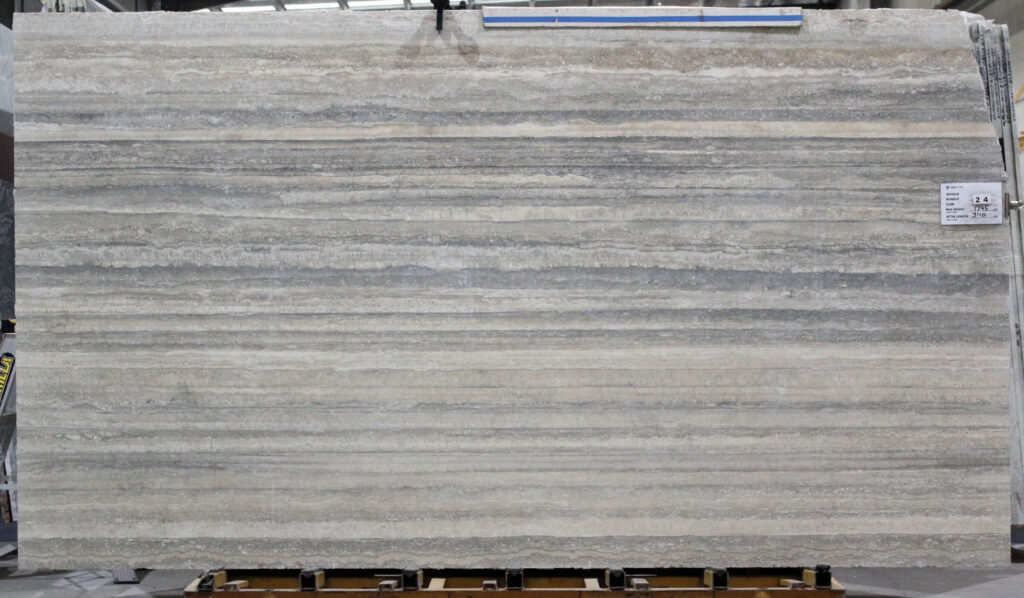
Vein cut or cross cut
The way a block is cut changes the look of the stone completely. Vein-cut travertine is sliced along its natural layers, revealing long, linear bands that suit contemporary walls and feature panels. Cross-cut travertine is sliced across those layers, producing a softer, cloudy pattern with a more classic feel.
Choosing a finish
- Filled and honed: cavities are filled and the surface is ground smooth for a refined, matte look.
- Polished: a filled surface brought to a gloss that deepens the natural colour.
- Tumbled or unfilled: a softened, textured surface with a relaxed, rustic character.
Where travertine works best
Travertine is popular for floors, wall cladding, bathrooms and building facades. Like other limestones it is sensitive to acids, so it benefits from sealing and a pH-neutral cleaning routine. In busy commercial areas a honed finish is a practical choice, as it hides everyday wear well.